Overview
The WiFi Shutter Control System is a complete home automation solution for automated roller shutter control. The project integrates custom hardware, open-source firmware, and purpose-built applications to deliver a reliable and secure system.
Project Objectives
- Convenience: Remote shutter control via smartphone
- Modernization: Upgrade existing installation without changing shutters or installing expensive proprietary solution
- Security: Encrypted and authenticated communication
- Scalability: Modular architecture for 9 shutters
- Stability: Long-term functional system without intervention
Global Architecture
Complete Technology Stack
The system relies on a three-tier architecture:
┌──────────────────────────────────────────────────┐
│         MOBILE APPLICATION (Flutter/Dart)        │
│  Android user interface                          │
└────────────────────┬─────────────────────────────┘
                     │ HTTPS REST API
┌────────────────────▼─────────────────────────────┐
│       PYTHON SERVER (Raspberry Pi)               │
│  • FastAPI REST API                              │
│  • MQTT Client → Mosquitto Broker                │
│  • SQLite database                               │
└────────────────────┬─────────────────────────────┘
                     │ MQTT Protocol
┌────────────────────▼─────────────────────────────┐
│         ESP12F MODULES (Tasmota)                 │
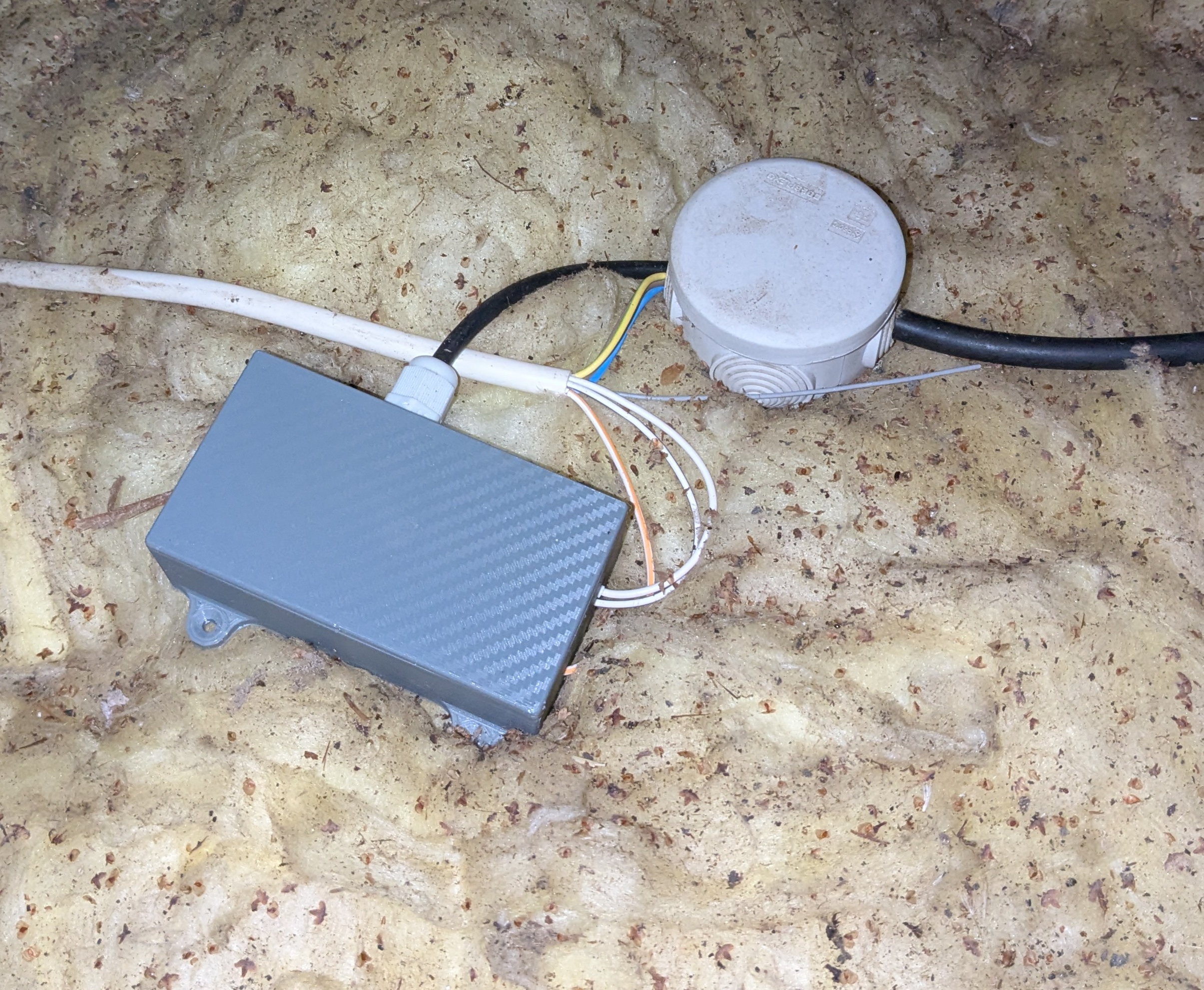
│  Enclosures in attic (x9)                        │
│  • Relay control                                 │
│  • MQTT status publishing                        │
│  • 2.4GHz WiFi                                   │
└──────────────────────────────────────────────────┘
Hardware Development
Embedded Electronics
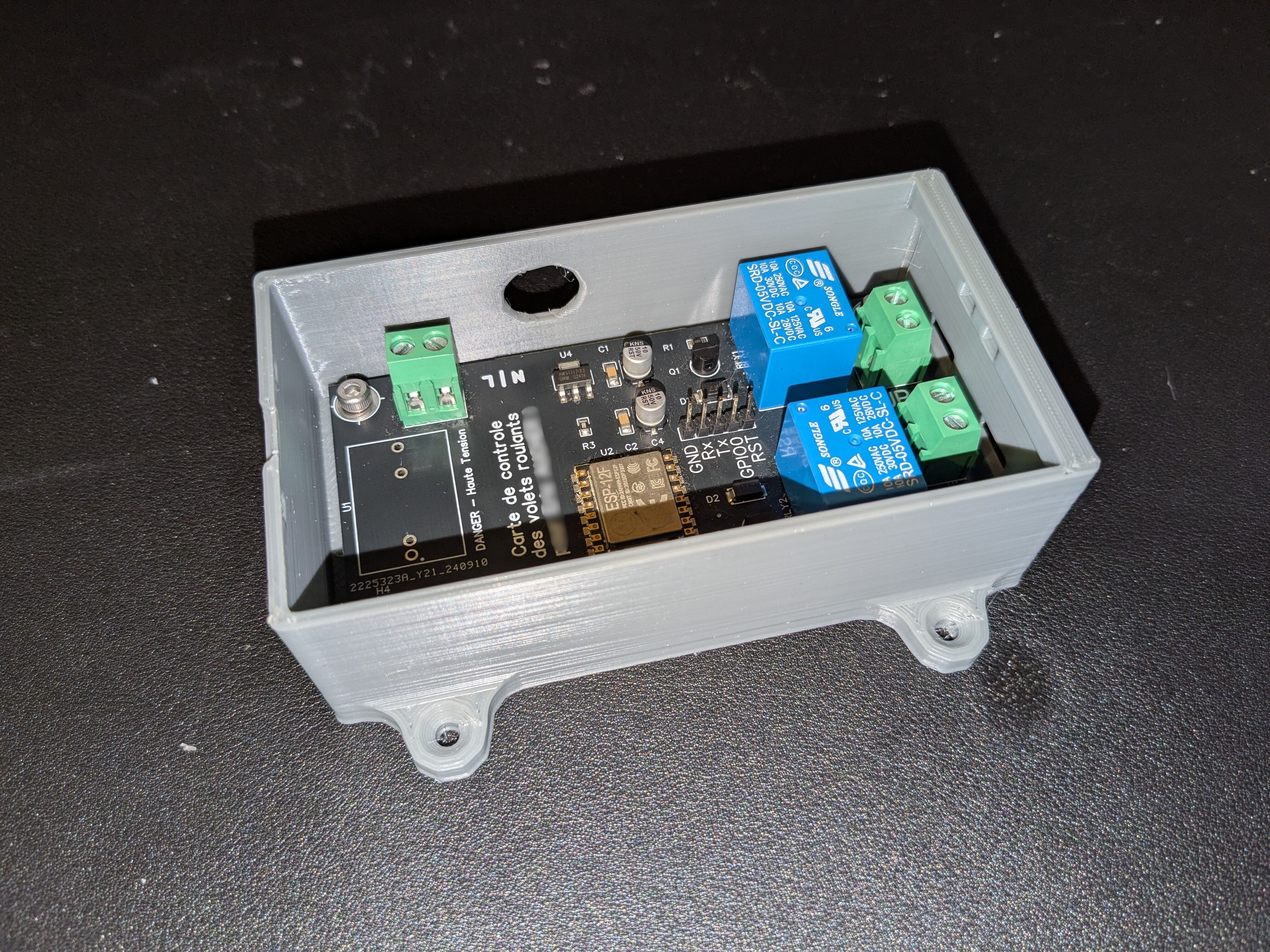
Operating principle: Dry contact between control wire and common (ground) for up and down. Dual-channel galvanically isolated relay solution (simple, reliable, rapid deployment).
Components: ESP12F, 2 relays, integrated 230V → 5V power supply board, external 0.5A fuse, programming connector.
3D Enclosure Design
Custom enclosure designed in Inventor and printed in PETG (Artillery SW X2) with snap-fit cover and heat-set inserts.
Lessons Learned
System operational on 9 shutters for several months with low latency and ~99% availability. Complete project integrating hardware (3D enclosures, 230V electronics), firmware (Tasmota/MQTT), backend (secure FastAPI with HMAC), and mobile (Flutter). Security ensured by HTTPS REST API, authentication managed by FastAPI, and remote access via VPN for minimal exposed surface. Main learning: scalable IoT architecture and network security.
Future Enhancements
- Increased isolation between mains and low-voltage traces
- Home Assistant integration for centralized home automation
- Partial opening management via learning and timing
- Limit switch sensors to detect closure